


January 7, 2026 •Dr. Julie Sessions, Curriculum Consultant

Imagine a digital sidekick that doesn’t just follow instructions but creates new things like stories, quizzes, lesson plans, and even eco-friendly ideas. That’s generative AI: artificial intelligence that learns from mountains of data and then creates brand-new content on demand. Think of it as your classroom creativity generator, ready to help you make learning greener and more engaging.
 Generative AI isn’t here to take your job. It’s here to give you superpowers — and maybe your planning period back. Here’s how you can put it to work:
 AI isn’t just a shortcut — it’s a study tool, a writing coach, and a creativity booster all rolled into one. Keep in mind that some AI platforms are age-restricted, so it’s important to match up students with the right ones. Here’s how students can use generative AI the right way:
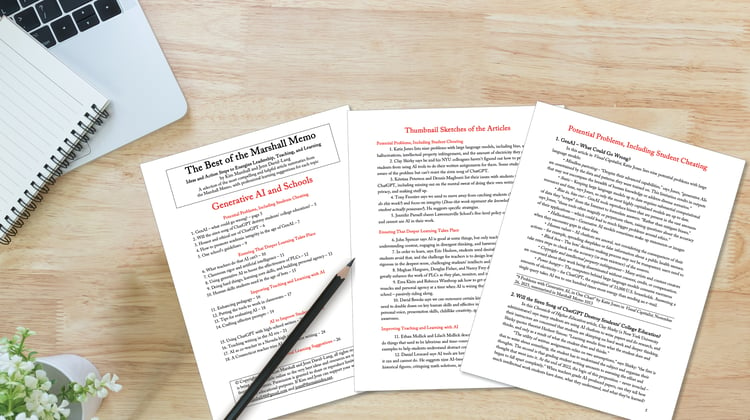
Check out The Best of the Marshall Memo, a compilation of top research articles on AI to help you dive deeper into some of the hottest topics in education.
As you are reading the articles, consider these three questions:
Potential Problems, Including Students Cheating
 GenAI – what could go wrong? – page 5
Will the siren song of ChatGPT destroy students’ college education? – page 5
Honest and ethical use of ChatGPT – page 6
How to promote academic integrity in the age of GenAI – page 7
One school’s guidelines – page 9
Ensuring That Deeper Learning Takes Place
What teachers do that AI can’t – page 10
Classroom rigor and artificial intelligence – page 11
Using generative AI to boost the effectiveness of PLCs – page 12
Doing hard things, learning core skills, and building personal agency – page 13
Human skills students need in the age of bots – page 15
Improving Teaching and Learning with AI
Enhancing Pedagogy – page 16
Putting the tools to work in the classroom – page 17
Tips for evaluating AI – page 18
Crafting effective prompts – page 19
AI to Improve Student Writing
Using ChatGPT with high-school writers – page 20
Teaching writing in the AI era – page 21
AI as a co-teacher in a Nevada high school – page 23
A Connecticut teacher tried AI with student writing – page 24
Professional Learning Suggestions – page 26
Generative AI is changing the way we teach and learn. Try out some of these tools and see which ones become your new classroom favorites. Who knows? You might just find that robot sidekick you always wanted.
But the next major question is: What is this doing to our environment? Generative AI can help us build a greener classroom and world if we use it thoughtfully and responsibly. Stay tuned for an upcoming blog to explore how AI intersects with environmental impact.